Protected
The heart
The formation
- WhatNatural coral
- SeenFrom above
- SwimNot permitted
Guides
Language
Currency
Look up datesfrom $249 · no cancel feeHelp me decide
Two taps to your trip
Say what you want from the reef and how long you want in the air, and a matching listing appears with its from-price.
Best match for you
from $249
It runs 60 minutes by fixed-wing aircraft, with pickup from Airlie Beach stays.
Best match for you
from $210
It runs 70 minutes for a group of up to 7, with guaranteed window seats named in its highlights.
Best match for you
from $244
It runs 65 minutes in a plane with panoramic windows, and the pilot makes several passes.
Best match for you
from $396
It pairs a 60-minute scenic flight with an inflatable boat day to Whitehaven Beach.
Best match for you
from $627
It is a 2-day reef pontoon stay with gourmet meals, rated 4.52 from 48 reviews.
A coral formation in the shape of a heart, hidden in a larger reef far from shore. Here is what it is, how it came to light, how the reef beneath it grew and why it is protected.
Editorial team, heartreefscenicflight.top · Updated November 7, 2026 · Reading: 6 min
Key facts
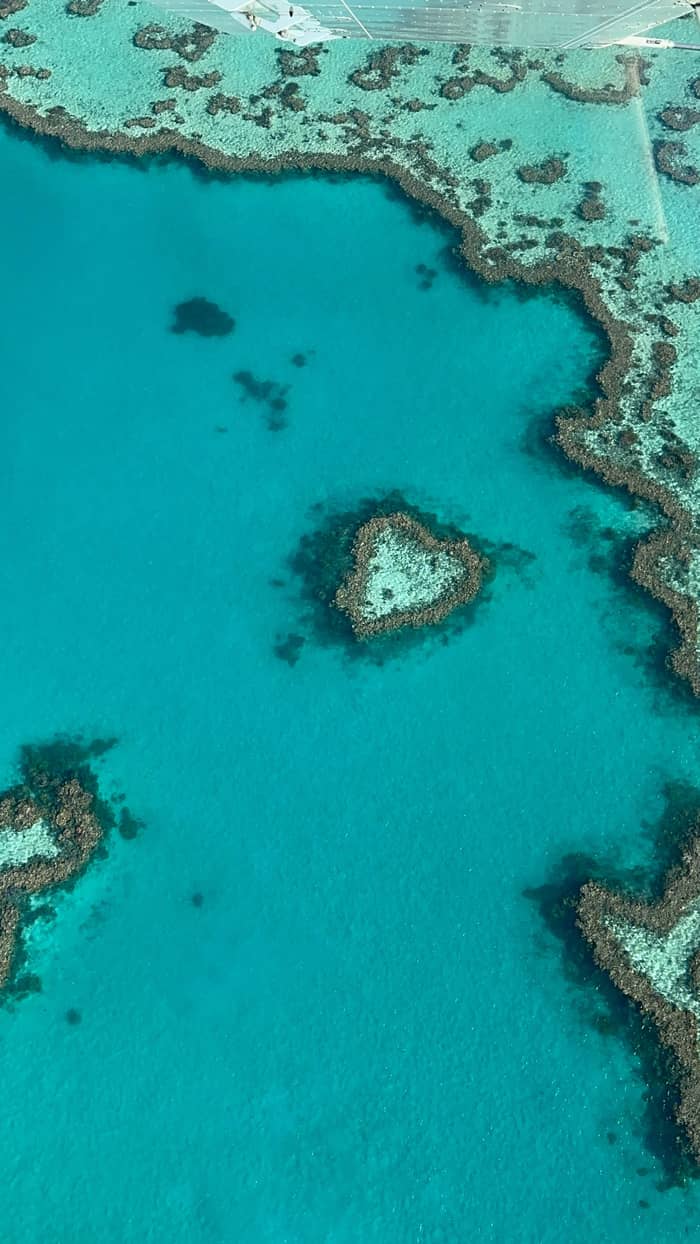
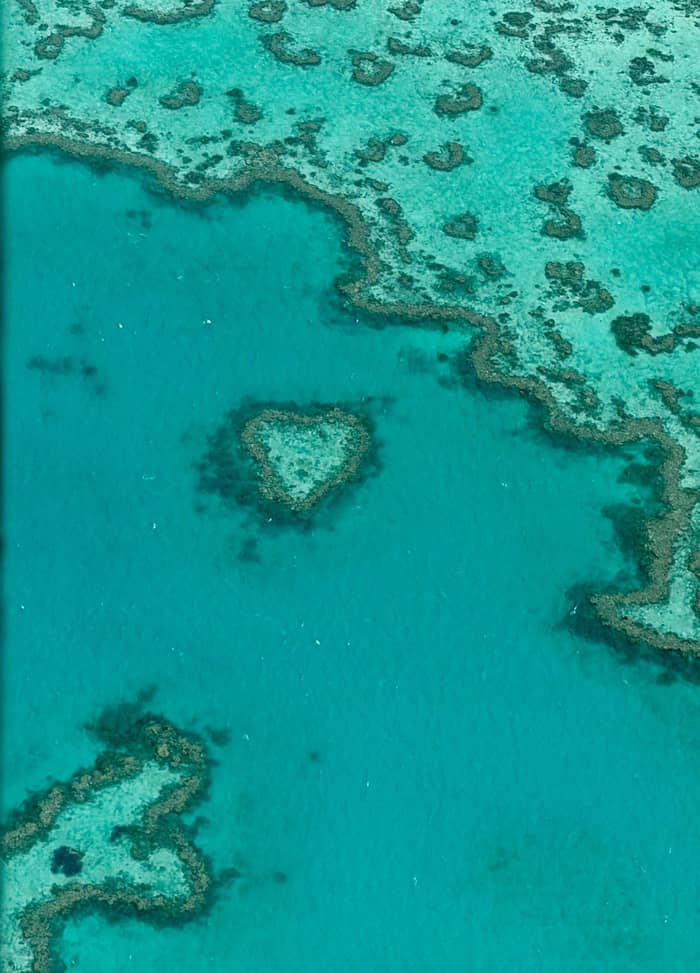
Heart Reef is a naturally heart-shaped coral formation in Hardy Reef, says Tourism Whitsundays, and the formation itself is protected, so in-water visits are not permitted.6 It is a piece of living reef, a shape in the coral, and not a structure or an island. Tourism Whitsundays adds that it is best seen from the air, where its vibrant blues and intricate outline come to life.7
The same tourism body describes it as one of the most recognisable sights of the region, a coral formation that appears on postcards and brochures across the globe.2 The picture sells itself: a heart outlined in dark coral, set in pale turquoise water, and the tourism body calls it a natural coral formation in the shape of a heart.1
Do not confuse the formation with the reef that holds it. Hardy Reef is a larger structure, home to the Reefworld pontoon, and Heart Reef is a small part of it.8,4 Hardy Reef is itself one of the many small reefs that make up the Great Barrier Reef.9 Names help here: the heart is the formation, Hardy Reef is the reef, and the Great Barrier Reef is the system around both.
Heart Reef at a glance
| Question | Answer | Source |
|---|---|---|
| Which reef is it in? | Hardy Reef1 | Tourism board |
| Is the shape natural? | Yes, a coral formation1 | Tourism board |
| Who spotted it? | A local pilot, in 19752 | Tourism board |
| Where is it? | About 80 km east of Airlie Beach14 | Tourism board |
| Can you swim there? | No, it is protected5 | Tourism board |
| How is it seen? | From above only11 | Tourism board |
Every answer is a statement by Tourism Whitsundays; the reef beyond the heart is described by the Reef Authority and Cruise Whitsundays.1
Tourism Whitsundays says Heart Reef was first spotted by a local pilot in 1975.2 The shape reads from the air, where the full outline sits clear against the surrounding lagoon, and that is the view a pilot has.12 The formation has since become one of the most recognisable sights of the region, appearing on postcards and brochures around the world.2
Boat tours can reach Hardy Reef and nearby reef areas, but the shape of Heart Reef is best seen from above, says Tourism Whitsundays.13 The same body places Hardy Reef about 80 km east of Airlie Beach, a long way from any beach you could stand on.14 Scenic flights run from Airlie Beach, Hamilton Island and Whitsunday Coast Airport, by helicopter, seaplane and light aircraft.15
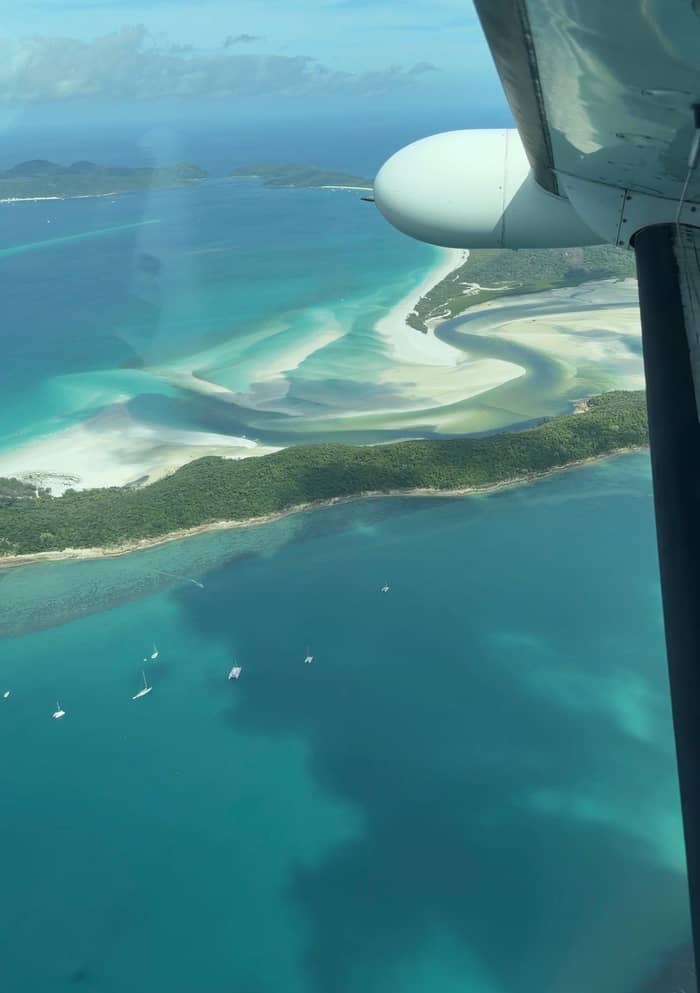
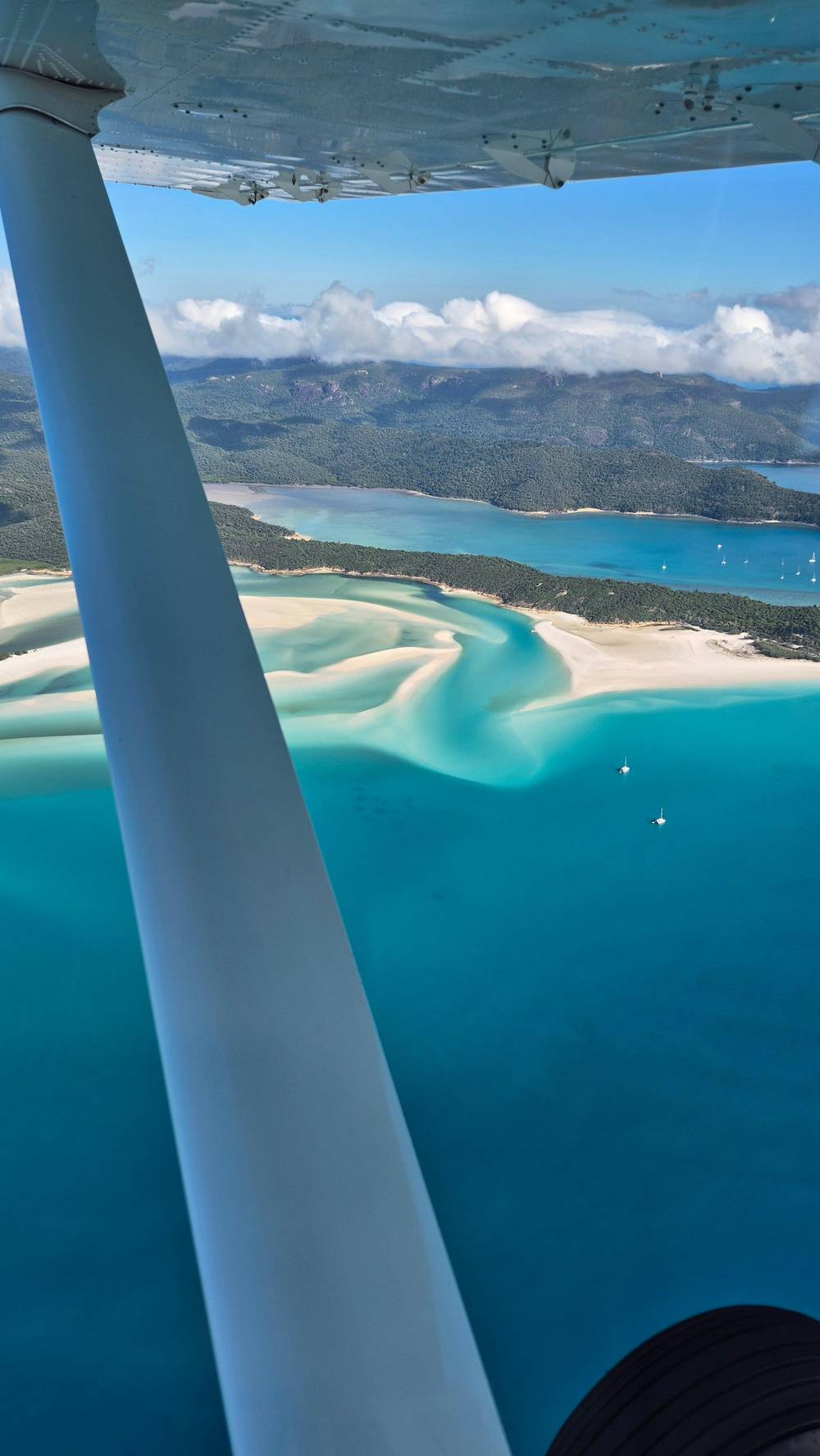
Since then the heart has become a favourite for proposals, anniversaries and big romantic gestures.16 If you plan to pop the question during a scenic flight, the tourism body advises telling your operator in advance, and the pilot may be able to help time the moment as you fly over.16 Many scenic flights include Heart Reef, Whitehaven Beach and Hill Inlet in the same trip, so the proposal can have a beach in the background as well.17
No official source explains how Heart Reef formed, that is, why this particular outline appeared. What the Reef Authority does explain is how the Great Barrier Reef grew. The current reef structure began growing on top of an older reef platform about 9000 years ago, when sea levels rose at the end of the last Ice Age.3 Sea levels reached their present level about 6000 years ago, giving corals ideal conditions along the tops of former low coastal hills.10
Hardy Reef belongs to that story. Tourism Whitsundays lists it as a place to dive the outer reef.21 Cruise Whitsundays describes a coral wall beside its pontoon and an intricate garden of hard and soft coral thriving in sheltered lagoons.22,23 The heart is a formation within that reef, and the official pages say no more about its cause.
Treat any detailed story of how the heart came to be with caution. A neat tale of a single cause is tempting, and the official pages do not tell one. They say the shape is natural, that it is a coral formation and that it sits within Hardy Reef.1 That is the whole of what can be stated as fact, and it is enough to appreciate the sight.
Three layers of one place
Protected
The formation
Pontoon and lagoon
The outer reef
World Heritage
The system
Tourism Whitsundays writes that Heart Reef may be small, but that seeing it is one of those Whitsundays moments that stays with you.4 The tourism pages give no measurement for it, which is why no size in metres appears here. Flights run from 30 minutes to full-day trips that add a pontoon stop, and what you see of the heart depends on the route the pilot flies.26
The lack of a figure matters less than it sounds. A scenic flight is long enough, and the window wide enough, to place the heart against the lagoon around it. Our listing is a 60-minute flight in a fixed-wing aircraft with big windows and a pilot who gives commentary. The pilot knows where the heart lies and can point it out before it comes into view.
Ask your operator how the pilot approaches the reef, whether in a circle or a single pass, and sit where you have a clear line of sight. Seating rules differ by operator: on the shared helicopter flights of Hamilton Island Air, for example, seats are allocated on the day and window seats cannot be guaranteed.27
Work out the bill
Pick the party size and see each flight with its from price.
Compare 3 alternatives
Pick the party size and see each flight with its from price.
≈
View≈
View≈
ViewStarting prices as on the booking platform, converted at the ECB reference rate. You see the exact price at booking.
From the seas to the sighting
About 9000 years ago
The structure began growing on an old platform as seas rose after the last Ice Age.3
About 6000 years ago
Corals found ideal conditions along the tops of former low coastal hills.10
1975
Tourism Whitsundays says the formation was first spotted by a local pilot.2
Since then
The sight now appears on postcards and brochures around the world.2
Today
To protect the coral, viewing is from above only.11
To protect the coral, viewing is from above only, with snorkelling and swimming kept to nearby lagoons and reef pontoons.11 Tourism Whitsundays states it directly: the heart is a protected formation, and swimming and snorkelling at the heart itself is not permitted.5 Tourism Whitsundays adds that in-water visits to the formation are not permitted at all.6
Flights run year-round, subject to weather, and often include wide views of Whitehaven Beach and Hill Inlet.28 The in-water side of the trip happens next door. Nearby pontoons and designated sites within Hardy Reef allow you to snorkel, dive or view coral from a glass-bottom boat.20 Hamilton Island Air runs a tour that lands on a private pontoon with a glass bottom boat tour of Heart Reef Lagoon, for a maximum of six guests plus a host.29 Its terms exclude non-swimmers and children aged 0-16.24
That tour is a separate product with its own requirements, and its minimum age is 17 years, while its tour lasts about 3 hours.30,31 Our own flight keeps you in the aircraft for the whole hour and asks for enough mobility to climb the aircraft steps unassisted. Choose according to what you want your feet to do.
Video
Keegan Koertzen on YouTube · Your tap on play is what loads the video.
Heart Reef is a naturally heart-shaped coral formation in Hardy Reef.
Before you fly
Heart Reef is a small detail in a very large system. The Great Barrier Reef is World Heritage-listed, one of the seven natural wonders of the world according to Tourism Whitsundays, and the largest living structure on Earth.32 Cruise Whitsundays gives over 2,900 individual reefs and 900 islands stretching for over 2,300 kilometres.33
The Reef Authority adds that the system includes more than 2900 separate coral reefs, and that some 1625 species of fish swim among more than 450 species of hard coral.18,19 The Whitsundays themselves are 74 tropical islands in the heart of that system.34 Against those numbers, a heart-shaped formation is a small gem. From above, the reef shows intricate patterns that can only be seen from the air, and a flight shows how the islands, the sand and the outer reef fit together.35
That is the right way to hold the sight in your mind. It is a small shape that reads as a heart from the air, and it gives a famous reef a face. Take the flight, enjoy the view and then, if you want, add a day near the water to meet the living reef that surrounds it, using the pontoons and designated sites that exist for that purpose.20
FAQ
It is a naturally heart-shaped coral formation in Hardy Reef, and it is protected.6
Tourism Whitsundays says it was first spotted by a local pilot in 1975.2
Tourism Whitsundays calls it small and gives no measurement.4
Tourism Whitsundays says the full outline sits clear against the surrounding lagoon when seen from above.12
Sources
Read on
Questions about the Heart Reef flight? A real person answers here.